


Serving Toronto & the Greater Toronto Area
Medical Facility Door Installation & Repair Across the GTA
Automatic entrances, fire-rated doors, access control and 24/7 repair for medical offices, dental practices, clinics, veterinary hospitals and long-term care homes.
Commercial doors for healthcare
Why medical facilities are harder on doors
Medical buildings are hard on doors in a way most commercial property is not, and they cannot close while the work happens.
- Entrances that never stop cyclingMain doors open hundreds of times before lunch. Operators wear out on volume, not age.
- Daily impact from carts and chairsStretchers, supply carts and wheelchairs hit the same doors every shift.
- Compliance you have to proveBarrier-free access and fire separations have to hold – and be documented.

What we do
Door services for medical facilities
From the front entrance to the medication room door – installed, repaired and maintained by one team.

Automatic, touchless & AODA entrances
Sliding and swing systems sized for medical traffic – wide enough for wheelchairs, walkers and stretchers. A doorway on a barrier-free path needs at least 860 mm clear width and, in most cases, a power operator. Wave-to-open actuators retrofit onto most existing units.

Accessible door hardware
Levers, push bars, closers and exit devices that meet accessibility requirements and survive clinical use. We walk every opening, flag the hardware that fails, and price the swap – it is usually the cheapest compliance fix in the building.

Fire-rated doors & inspection
Rated assemblies only work if the whole assembly works – door, frame, closer, latch, gasketing, clearances. We correct the failures that void a rating: a wedged-open door, a painted-over label, a closer that no longer latches fully.

Access control for restricted areas
Medication rooms, records storage, laboratories, staff corridors and after-hours entrances. Card, fob and keypad systems scheduled to unlock at opening and secure at close – and every controlled door still releases for egress, as fire and life safety codes require.
Reception windows
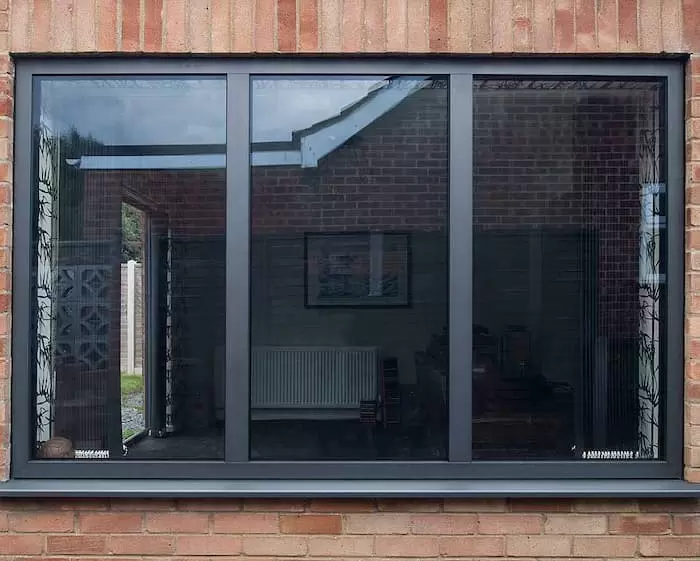
The window between reception and the waiting room takes more daily use than most of your doors. Sliding reception windows, pharmacy and dispensary transaction windows, specimen pass-throughs – with speak-through panels, deal trays and frames finished to match your millwork.
Emergency repair & maintenance
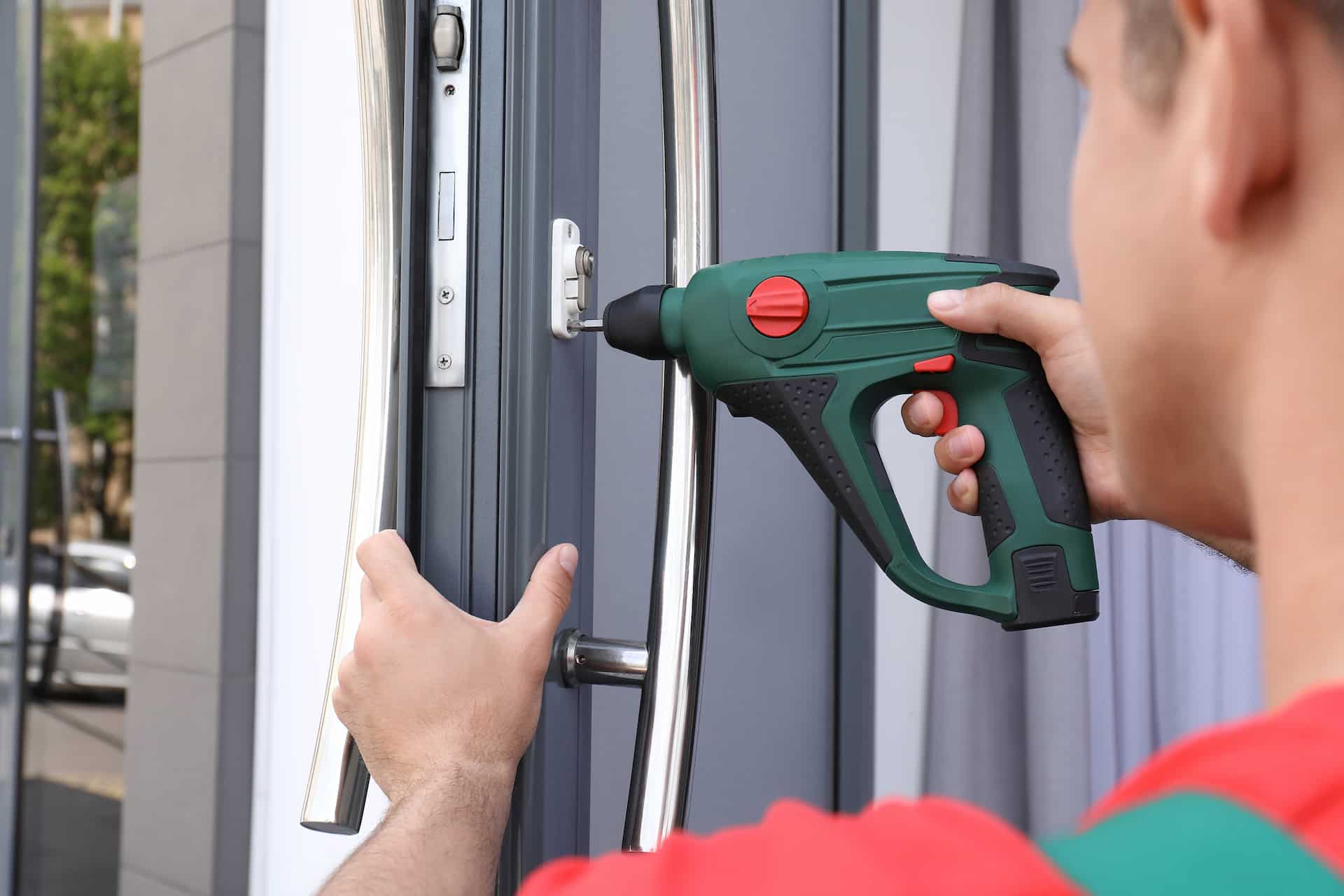
A failed entrance in a walk-in clinic on a Saturday morning is not a Monday problem. We respond to broken operators, doors that won’t latch and forced-entry damage. Scheduled maintenance visits keep you off that call list – we adjust closers, replace wear parts and document each visit.
Facilities we work with
Every facility type has different doors
A dental office and a long-term care home have almost nothing in common at the opening level.
Dental & orthodontic
Storefront units where accessible entry and a busy reception window matter most.
Automatic entrance · Reception window · Barrier-free washroom
Walk-in & family medicine
The highest entrance cycle counts in outpatient care – main doors run from open to close without a break.
High-cycle operators · Vestibule sealing · After-hours locking
Physiotherapy & rehab
Patients arrive with crutches, walkers and chairs. Clear width and opening force decide whether they get in unassisted.
Wide entrances · Low opening force · Impact-tolerant doors
Veterinary clinics
Wash-down cleaning, noise and constant impact mean hardware wears out fast.
Corrosion-resistant hardware · Kennel sound control · Service door
Diagnostic imaging
Shielded openings are specified by a radiation physics report. Everything around them is standard commercial work.
Stretcher-width entrance · Fire separations · Records access
Long-term care & retirement
The most door-dense buildings in healthcare, and the most heavily inspected.
Rated corridor doors · Quiet-close resident doors · Secure unit entry
Medical office buildings
Multi-tenant, which means one property manager fielding complaints from a dozen practices.
Lobby operators · Tenant suite hardware · Stairwell inspection
Hospitals & campuses
We handle the commercial openings alongside your existing specialty vendors.
Public entrances · Department fire doors · Controlled access
Free site assessment
We’ll walk your facility and price every opening
One visit. We check every entrance, rated door and access point, then send a written scope with pricing.
- 1 We walk the site
- 2 You get a written scope
- 3 You decide, no obligation
Toronto · Vaughan · Mississauga · Brampton · Markham · Richmond Hill
Questions
What facility managers ask first
Do you work in occupied medical facilities?
Yes. Most of our healthcare work happens in buildings that stay open. We schedule around clinic hours where the opening can be out of service, work evenings and weekends where it can’t, and follow the facility’s infection control requirements for dust containment and barriers.
How often do fire doors need to be inspected?
More often than once a year, which surprises most facilities. Under the Ontario Fire Code a door in a fire separation is inspected every month, and doors forming part of a means of egress are checked monthly as well. Annual testing applies on top of that, covering egress doors and any electromagnetic locking hardware. The building owner carries the legal responsibility even where a property manager or facility team does the work, and the records have to be available on request. We provide written documentation with every inspection.
Are doorknobs allowed in a medical office?
Not on a barrier-free path of travel. Accessible hardware has to be operable with one hand, without tight grasping, pinching or twisting the wrist – which rules out standard round knobs. Lever handles and push bars meet the requirement, and swapping them is usually inexpensive.
Can you retrofit touchless openers onto our existing doors?
Usually, yes. If you already have a low-energy power operator, adding a wave-to-open actuator is typically straightforward. If the door is fully manual, it needs an operator first – we’ll tell you which situation you’re in during the assessment.
What areas do you cover?
Toronto and the surrounding GTA, including Vaughan, Mississauga, Brampton, Markham, Richmond Hill and Pickering. Call 647-424-1351 to check your address.