


Commercial door specialists since 2002
Office Building Door Installation & Repair Across the GTA
From the lobby entrance to the parking-level stair door, we install, repair and inspect every opening in your building. Scheduled around your tenants. Documented for your fire inspector.
Commercial doors for office property
Nobody calls about a door until it stops closing
By then it has usually been drifting for months. Office doors rarely fail outright, and the building tells you in tenant complaints long before it tells you in a deficiency notice.
- Winter turns your lobby into a pressure problemWarm air rising through a tall building pulls cold air in at grade, and the entrance doors take the difference. They get heavy to open. They stop latching. Operators start faulting. Nothing looks broken, because nothing is.
- Traffic that no other opening comes close toA main entrance can run through hundreds of open-and-close cycles a day. At that rate closers, pivots and exit devices are consumable parts, and pretending otherwise is what turns a service call into a replacement.
- A compliance job that comes around every monthThe Ontario Fire Code sets a monthly inspection for doors in a fire separation, on top of the annual testing most buildings already budget for. The records need to exist before anyone asks to see them.
- Sag you cannot see until the hardware givesHinge screws work loose slowly in a heavy door. By the time the latch is missing the strike, the closer has been fighting the extra load for months.

Building Code & Fire Code
Two codes govern your doors. Most buildings track one.
The Building Code decides how an opening was built. The Fire Code decides what you have to keep doing about it, every month, in writing. Both moved recently.
- The rule on entrances got much widerThe old requirement set a minimum count that scaled with how many entrances a building had. The 2024 edition extends it to all pedestrian entrances, each connected to a barrier-free exterior path of travel, with service entrances exempt. This governs new construction and major renovation, so an existing Toronto building is not suddenly offside. It does mean an accessibility review carried out before 2025 was scored against the older rule.
- Power operators, whatever the building is used forThe requirement for a power door operator on doors providing that barrier-free path used to depend on how the building was occupied. It no longer does, which catches out anyone working from a pre-2025 review of their own building.
- There are two clocks, not oneMost owners only track the slower one. Doors in a fire separation are inspected every month under the Ontario Fire Code, and doors in a means of egress are checked monthly too. On top of that, egress doors and their locking hardware are tested annually. If your program is built around one yearly visit, the monthly half is not happening.
- The 2026 amendments tightened the paperworkElectromagnetic locks are tested at intervals of no more than twelve months, and the results have to be recorded. Amendments in force since January 1, 2026 raised what is expected on egress doors generally, and they reach buildings that are already standing. Municipalities also gained a new penalty tool at the same time.
What we do
Every opening, one contractor
Six services that cover a building end to end, carried out by the same crew that surveyed it.

Lobby entrances and storefront
The first thing a tenant touches every morning, and the first thing to show wear. Aluminum storefront entrances, thermally broken frames, pivots, closers and thresholds sized for real lobby traffic. When a door has dropped out of square, new hardware beats a new door on both cost and lead time. Failed glazing gets replaced in the frame you already have.
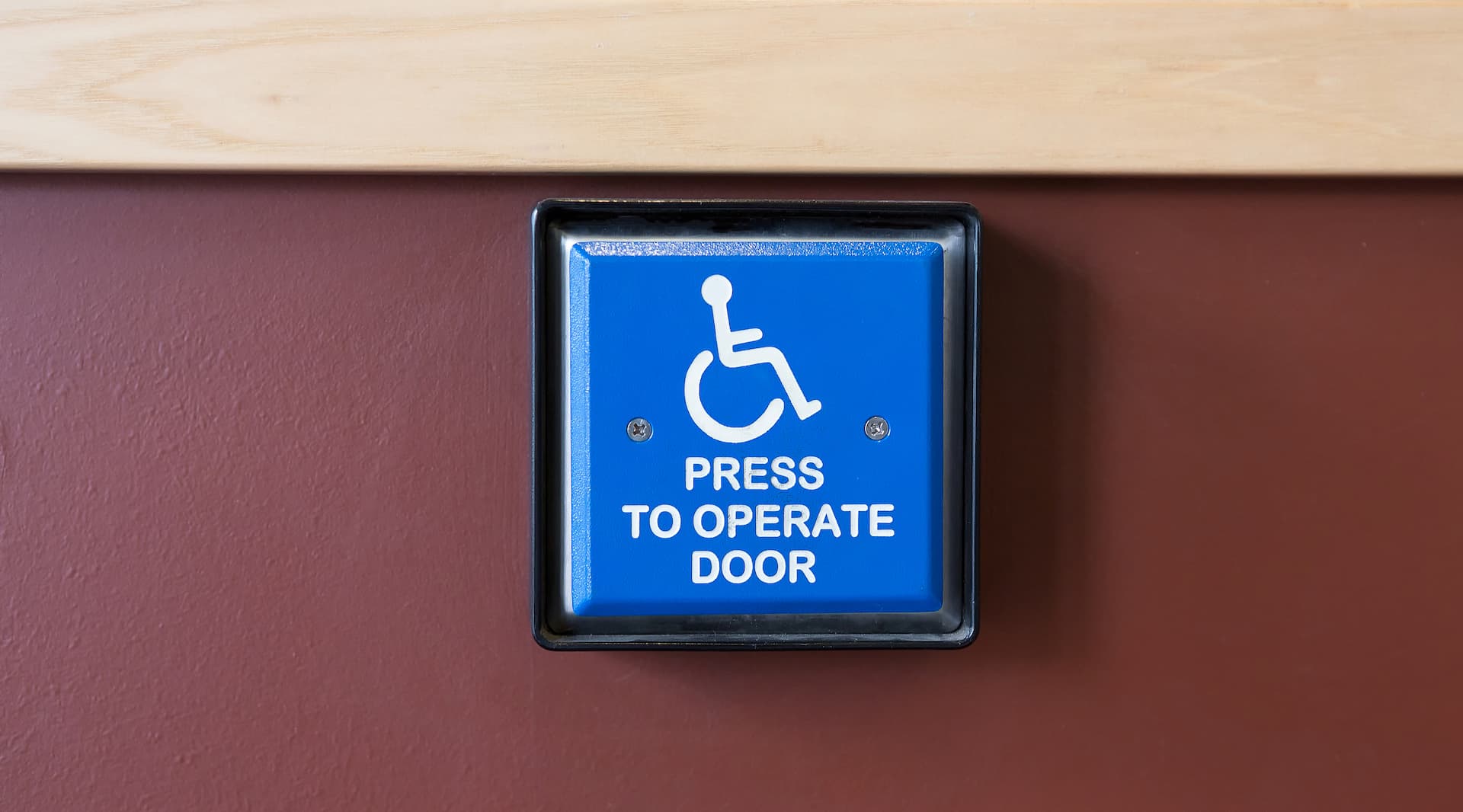
Power operators and accessible entrances
Where the Code calls for a power operator, we size it for the cycle count the door will see. Low-energy swing operators, automatic sliding entrances and push-plate activation, including the inner vestibule door that gets forgotten. An operator that is faulting is not always an operator that is finished, and a sensor or a control board often brings it back.
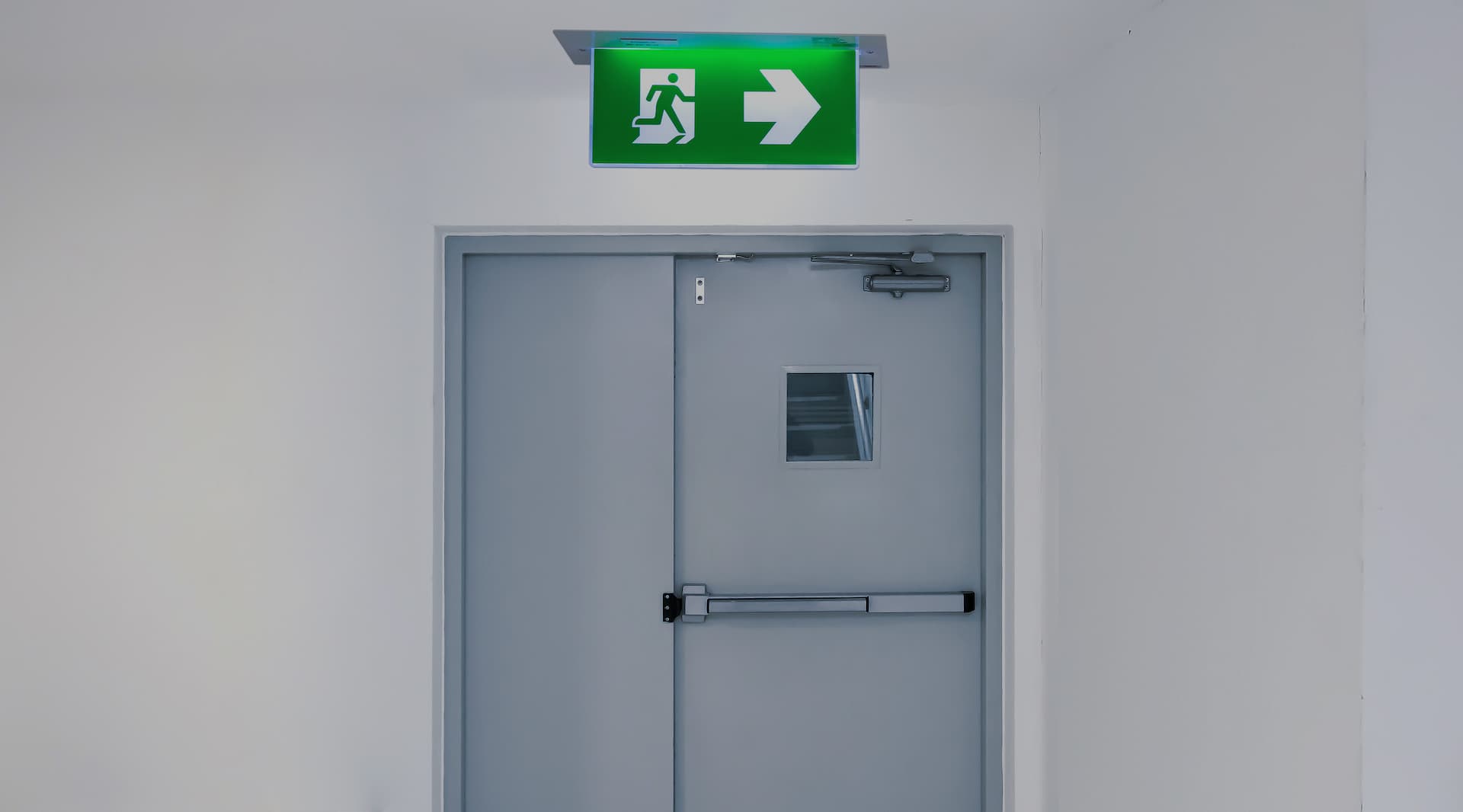
Fire doors and stair doors
Your exit stairs, service rooms and corridors run on hollow metal doors that nobody looks at until an inspection. We check each one against the separation it actually sits in, correct closing and latching, and hand back a numbered register you can put straight in front of a fire prevention officer.
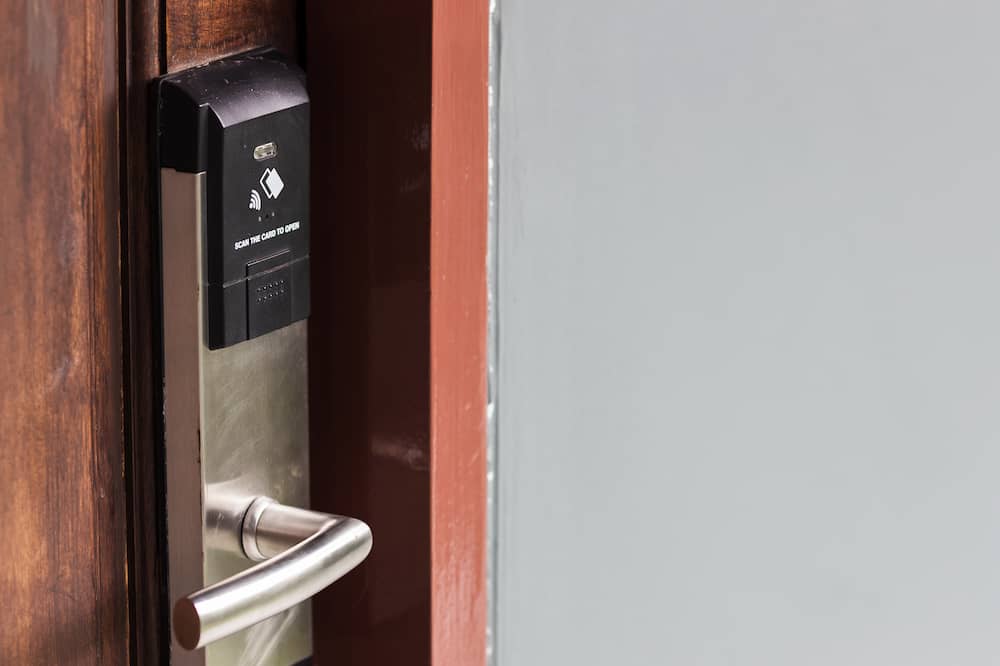
Access control and electrified hardware
Readers, electric strikes, electrified locksets and mag locks across lobby, stair, suite and parking-level doors. If your building still runs legacy prox cards, they can be copied in under a minute with hardware anyone can buy. Multi-technology readers move you to encrypted credentials without re-badging every tenant on day one.
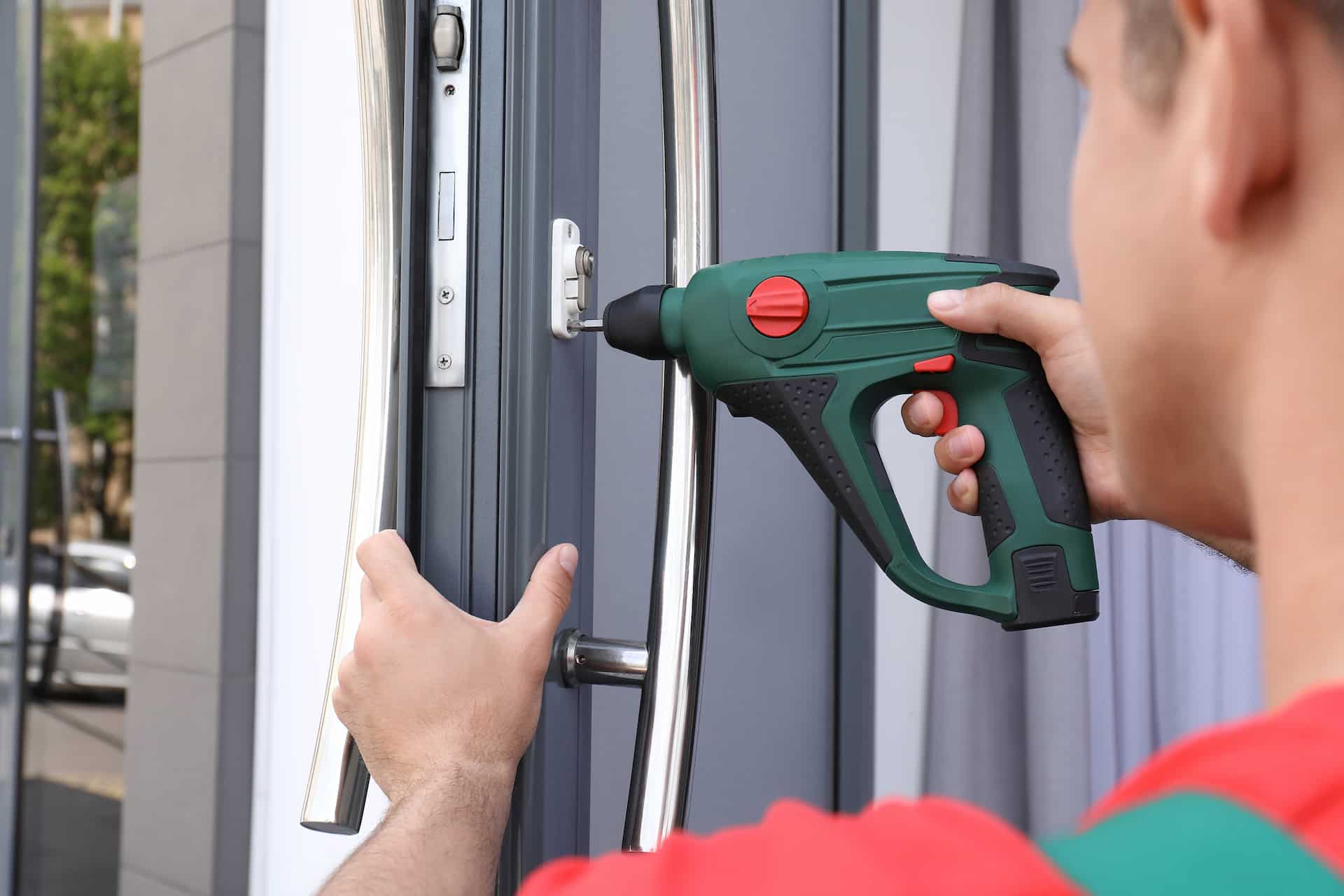
Closers, hinges and suite entries
The unglamorous work that keeps tenant complaints down. Closer replacement and seasonal adjustment, continuous hinges on doors that will not stop sagging, strike alignment, seals and sweeps. We book it as a route across your sites instead of one call at a time, which keeps the trips down and makes the schedule easier to plan around.

24/7 emergency door repair
A lobby entrance that will not secure is a same-night problem when there are tenants and their files sitting above it. We respond to failed closers, doors that will not latch, broken glass and forced-entry damage. If the permanent fix needs a part we do not carry, we secure the opening that visit and come back with it.
Who we work with
A tower and an office park are different buildings
Their door schedules have almost nothing in common, and the Toronto office stock we work on runs the full range between them.
Class A office towers
High-rise entrances, pressurized stairs and a lobby that has to look right while it takes the whole building through it every morning.
Revolving and sliding entrances · Stair door surveys · Overnight scheduling
Class B repositioning projects
Landlords upgrading an older building to chase better tenants, where the entrance is doing most of the persuading.
Entrance replacement · Thermally broken frames · Accessible upgrades
Suburban office parks
Multiple low-rise buildings on one site, usually with more exterior doors per square foot than anything downtown.
Multi-building routes · Exterior door replacement · Weather sealing
Single-tenant corporate headquarters
One occupier who cares how the building presents and wants work done without an audience.
Scheduled maintenance · Access control · After-hours work
Multi-tenant mid-rise
Suite entries off a public corridor, shared washrooms and a fire separation almost everywhere you look.
Suite entry doors · Rated corridor doors · Closer adjustment
Coworking and flex space
Heavy member churn and a lot of glass, in a space where the door layout gets redrawn every time the floor plan does.
Glass door hardware · Re-keying and credentials · Fast turnarounds
Mixed-use office podium
Office floors sitting over retail or residential, which means shared exits and more than one party with an opinion about the door.
Shared exit paths · Separated access control · Landlord coordination
Portfolios and multi-site managers
One hardware standard and one inspection record set across everything you manage, so a deficiency in Whitby is logged the same way as one downtown.
Single account · Consolidated reporting · Standard specification
Book a survey
A survey comes before any number
We walk the building, record what each opening is doing against what it’s supposed to do, and give you a numbered register you can budget from and hand to an inspector.
- 1We survey every opening
- 2You get a per-door register
- 3You stage the work by budget
Toronto · Vaughan · Mississauga · Brampton · Markham · Richmond Hill · Pickering · Whitby · Ajax · Oshawa · Newmarket · Whitchurch-Stouffville · Bradford · Barrie · Orangeville
Questions
What property managers ask first
How often do our fire doors legally have to be inspected?
More often than most buildings think. Under the Ontario Fire Code a door in a fire separation is inspected every month, and doors forming part of a means of egress are checked monthly too. Annual testing applies as well, on egress doors and on any electromagnetic locking hardware. So it isn’t one or the other. If your building runs a single yearly visit and nothing in between, the monthly half of the obligation is going unmet. The owner carries the legal responsibility even where a property manager does the work, so the records matter as much as the inspection itself. We can run the monthly cycle and the annual testing for you, or show your building staff what to look for month to month and handle only the repairs they turn up.
Does every entrance in our building need a power door operator?
For anything you build or substantially renovate now, effectively yes. The 2024 Building Code requires a power operator wherever a door provides the barrier-free path of travel at an entrance, and it no longer matters what the building is used for. Two details catch people out. A vestibule means the inner door counts as well. And the number of entrances that have to be barrier-free went up in the 2024 edition, so a review carried out under the old rule will understate what applies to you. To be clear about the limit: none of this obliges you to retrofit a building you’re not otherwise touching. It bites at new construction, extensive renovation and change of use.
Why are our lobby doors so hard to open in the winter?
Almost always stack effect. The doors themselves are fine. Warm air rises through a tall building and escapes near the top, which leaves the base at negative pressure and pulls outside air in through the entrance. Your doors carry that difference. The same pressure stops them latching and makes automatic operators strain or fault, and the whole thing eases off in spring, which is why it gets logged as intermittent and never fixed. Vestibules and revolving doors are the structural answers. Correct closer sizing and a seasonal adjustment are the practical ones.
Can you do the work outside business hours?
Yes, and for occupied office buildings that’s usually how we schedule it. Lobby and corridor work happens evenings, overnight or on weekends so tenants aren’t routed around a work zone. For buildings with a landlord access window we work to it.
Do you service door operators you did not install?
Yes. That includes the common makes: Horton, Nabco and Dormakaba. It matters more than it sounds. A portfolio assembled over twenty years has usually been through several contractors, so the alternative is keeping a different vendor on file for each building.
Can you cover several buildings under one agreement?
That’s most of our office work. One specification, so the suite door you approve in Mississauga is the one that gets installed in Markham. One schedule, and one set of records instead of a different filing system at every site. Tell us how many buildings and roughly how many openings and we’ll scope it.
Do you work on other kinds of property?
Yes. Office property is one of several sectors we run a dedicated service for. The others include medical facility doors for clinics, dental offices and long-term care, and restaurant doors for food service. The full list is on our industries page. Mixed-use portfolios often need more than one of them, and that’s still one account.
What areas do you cover?
All of Toronto and out across the GTA, from Vaughan and Mississauga to Markham, Brampton, Richmond Hill and Pickering. If you are not sure whether a building is in range, call (647) 424-1351 and we’ll tell you straight.