


Property managers · Condominium boards · Rental owners
Property Management & Condominium Door Services Across the GTA
Since January 2026 the Ontario Fire Code has wanted a monthly check on every door in a fire separation, and the duty sits with the building’s owner, whoever does the checking. When that round turns up a suite door that won’t latch, a stair door dragging on its frame or a garage man-door rusted through at the sill, we’re the ones who fix it, and we write each repair up so it can go straight into the file.
What changed in 2026
Since January, fire doors have been a monthly item on your list
Three rules around condominium and rental doors changed this year. Most of the service agreements managers inherited were signed before any of them.
- O. Reg. 87/25Monthly, where it used to say annualO. Reg. 87/25 put each door in a fire separation on a monthly inspection cycle from 1 January 2026. If your fire protection contract still says annual fire door inspection, it was written for the old rule and nobody has gone back to update it.
- Ontario Fire CodeThe owner carries it, and in a condo that’s the corporationThe Fire Code hands its duties to the Owner. A condominium corporation fits that definition, so the board owns the obligation even when a management firm and half a dozen contractors do the work.
- O. Reg. 260/25Fines can now arrive as ticketsUnder O. Reg. 260/25 a municipality that adopts the by-law can issue an administrative penalty for a Fire Code contravention on the spot. A hearing officer reviews it, and there is no court date.
- Condominium Act, s. 90Wear and tear is the corporation’s to fixSection 90 of the Condominium Act puts maintenance of the common elements on the corporation, and the Act says maintaining includes repair after normal wear and tear. A closer that has lost its spring over ten winters falls inside that sentence.

What we do
Repairs on the common-element side of the door
Corridor, stair, lobby, amenity floor and the underground garage, from one contractor who answers to whoever signed the work order.
 Compliance
Fire door deficiency repairs
Your monthly round, or the fire department’s visit, hands you a list. Doors that don’t close on their own, don’t latch, sit proud of the frame, or have lost a seal or a label. We work through it. Closers, latches, strikes, hinges, smoke seals, gasketing, and now and then a leaf or frame that’s past saving. Each repair comes back written up by floor and door number, so the fix sits beside the finding in your binder.
 Fire separation
Suite entry and corridor doors
A tower corridor is a row of solid-core or steel doors, each on a self-closer, and the closers are what go first. We adjust, rebuild or replace closers and latching hardware, re-hang leaves that have dropped on their hinges, renew smoke seals, and change the door itself when the core has split or the edge has been planed one time too many. Where the declaration makes it a common element, the replacement matches the corporation’s standard and not whatever the resident found at a big-box store.
 Exit stairs
Stairwell doors
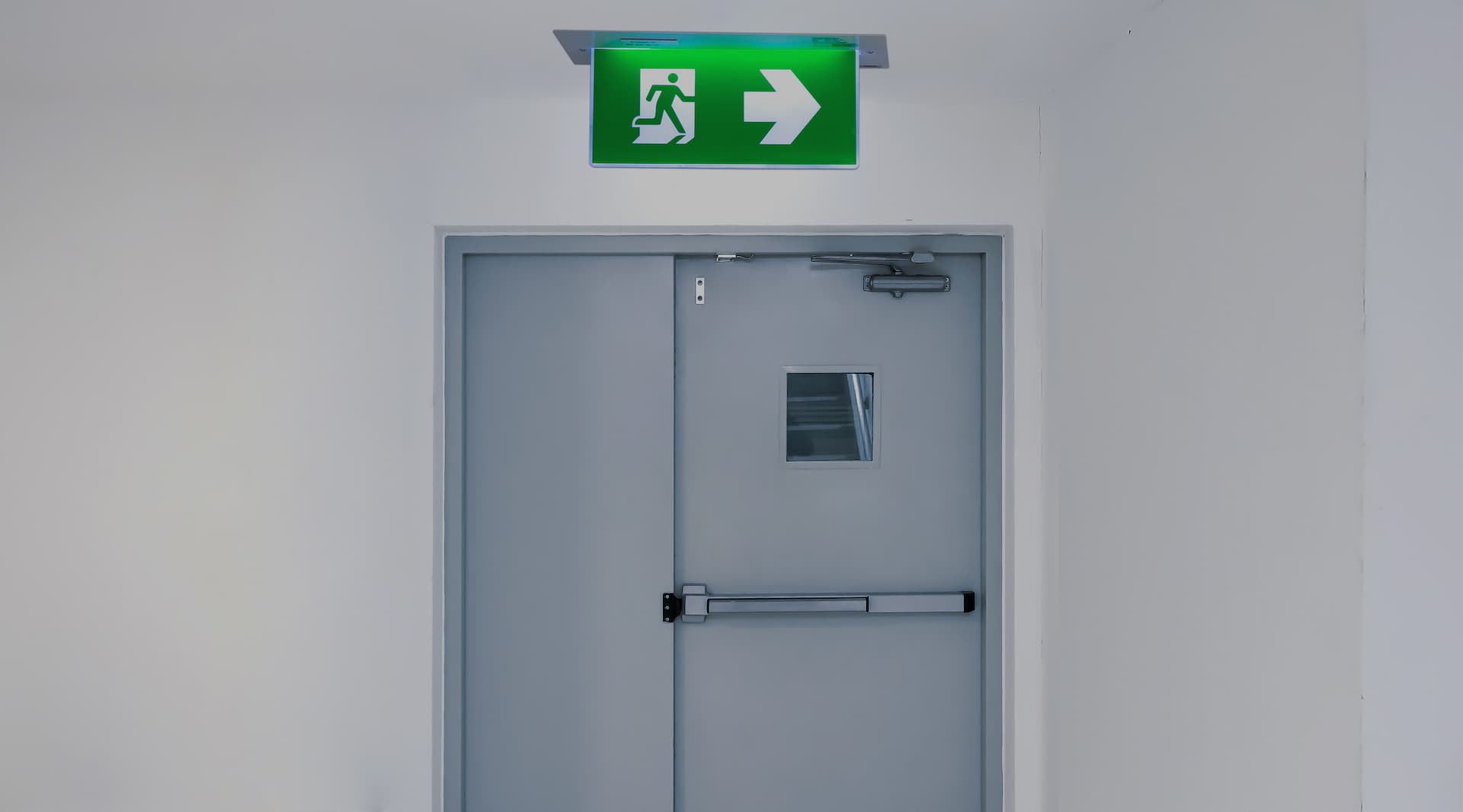
Hollow metal doors and frames, exit devices, closers with enough power for a pressurised stair, and continuous hinges for leaves that have started to sag. While we’re in the stair we check two things the Building Code cares about and most buildings have never looked at: whether people can get back onto a floor from the stair as often as the rules require, and whether the signs and floor numbers on the stair side say so.
 Entrance
Lobby entrances and power operators
Aluminum entrance doors, vestibule pairs, pivots, thresholds and power operators for the front door and the amenity floor. More owners are staying in their suites into their eighties, and a lobby door that takes two hands shows up as a complaint at the board meeting long before anyone calls it an accessibility issue.
 Security
Fob readers, strikes and mag locks
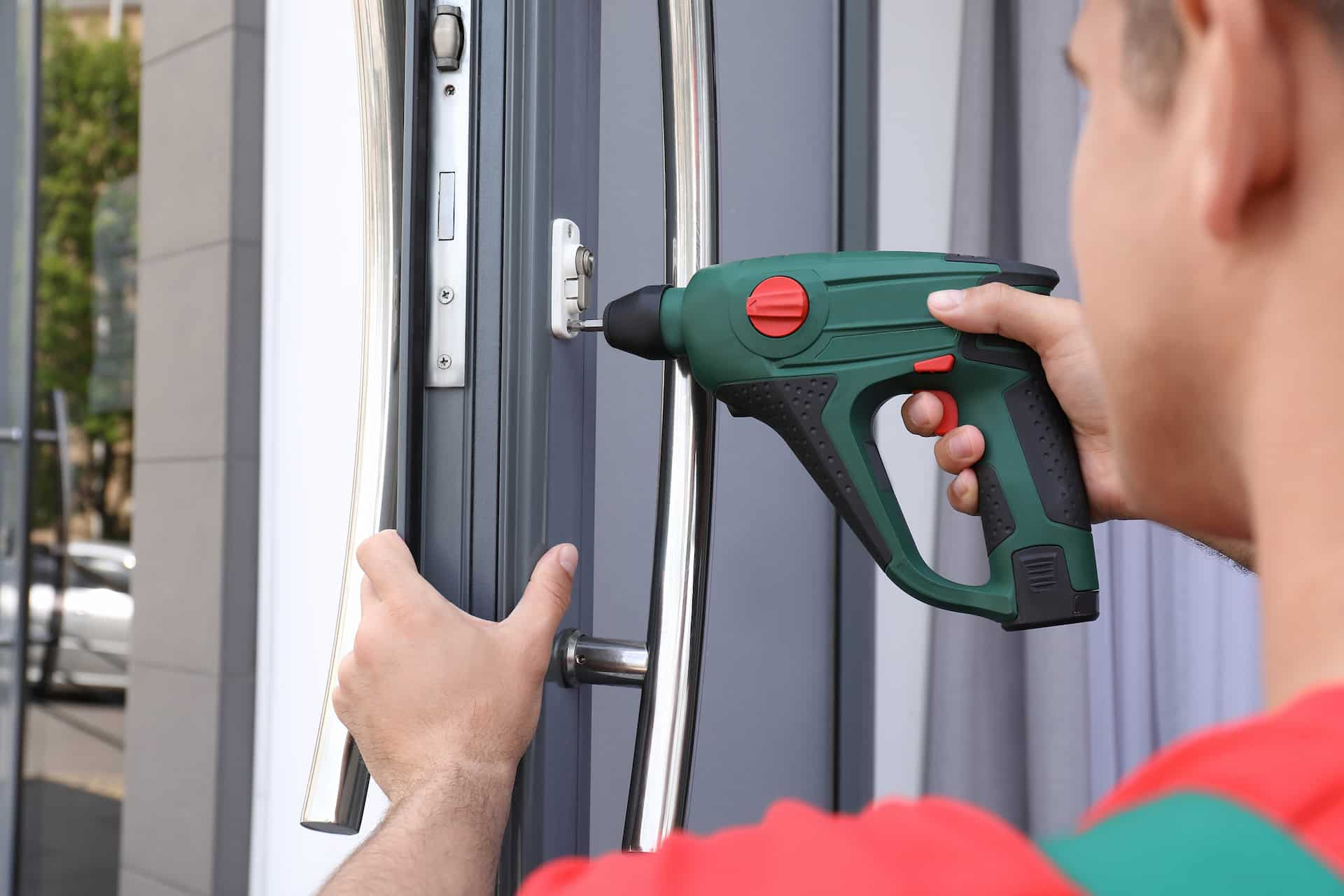
Readers, electric strikes and magnetic locks on the lobby, garage, amenity and service doors. A lost fob gets cancelled at a keyboard. A lost master key can mean re-coring half the building. A mag lock on an exit route has to release when the fire alarm sounds, and the Fire Code wants it tested at least once a year. If yours fails, or nobody remembers the last test, we repair or replace the lock so it does what it should.
 Underground garage
Garage man-doors and service rooms
The walk-through door beside the ramp, and the garbage, moving, electrical and sprinkler room doors behind it. Road salt and the water that runs down the ramp rot steel frames at the sill and seize closers solid. We replace the frame, the door, or both. The overhead door residents drive through isn’t our trade, and we’d rather say that on the phone than quote it badly.
Ontario Fire Code
What the 2026 amendments ask of your doors
They didn’t invent a new kind of door. They changed how often someone has to look at the ones you have, and how much paper you need to prove it.
- Doors in fire separations: every monthArticle 2.2.3.4 calls for a monthly inspection of each door in a fire separation. In practice that’s a hand on the door, confirming it closes and latches on its own with the seals and label intact. Your superintendent or your fire protection contractor usually walks it. We’re who they call about what it fails.
- Doors on an exit route: monthly, and tested yearlyA door that forms part of a means of egress gets the same monthly look plus an annual test under Section 2.7, which also covers electromagnetic locks, tested no less than once a year. The two schedules run side by side, and one does not stand in for the other.
- Keep the recordDate, who looked, which door, what they found, what was done about it. When a fire prevention officer asks for the file it has to exist on paper. Each repair we do comes with a write-up by floor and door, so the fix lands in the same binder as the finding.
- Suite doors: settle the scope with your fire departmentMost of the guidance published since January treats suite entry doors on a fire-separated corridor as part of the monthly round. At least one management firm reads the rule more narrowly. Your local fire prevention office is the authority for your address. Ask them once, write the answer down, and set your round to it.
Condominium Act & Building Code
The rules the door trade usually hasn’t read
Who owns a door decides who pays for it, and the Building Code has opinions about the stair side of it.
- Condominium Act, s. 98An owner can’t just change a common-element doorSection 98 requires written approval from the corporation, and a signed agreement, before an owner alters a common element. A suite door swapped without that paperwork becomes the board’s problem, along with whatever fire rating it does or doesn’t have.
- Your declarationThe declaration draws the lineWhether a door belongs to the unit or to the common elements is set out in your building’s declaration. There is no provincial list. We can explain how the split usually works. Your condo lawyer tells you how it works in your building.
- Ontario Building CodeBack onto a floor at least every fifth storeyExit stairs cannot be locked against re-entry all the way down. The Building Code wants a way back onto a floor at intervals of five storeys or less, a sign on the stair side of each door that allows it, and floor numerals on both faces of every stair door. Ten minutes in the stair tells you whether your building passes.
- 2024 Building CodeAccessibility, and when it kicks inThe 2024 Building Code calls for 850 mm of clear width and a power operator on the barrier-free route into a building. That applies to new construction, substantial renovation and change of use. An older lobby is not out of compliance because the rule is newer than the building, though owners aging in place may still ask the board for the operator.
Field notes
What the monthly round usually turns up
Four findings that fill most inspection lists, and what it takes to fix each one.
Suite door closers that have given up
The door swings to within an inch of the frame and stops. That’s the fire separation standing open, on however many suites got the same closer in the same year. Residents also disconnect closers that feel heavy, which is a Fire Code failure and an accessibility complaint at the same time. The fix is a new closer sized to the leaf, and a latch that catches first time.
Stair doors dragging on the frame
Worn hinges plus the air pressure in a tall stairwell. The leaf has to be lifted to latch, so it doesn’t get latched. A continuous hinge and a stronger closer usually settle it. Sometimes the frame has to come out.
The building breathing in winter
Warm air rising through a tower pushes the lower doors open and leans on the upper ones. Doors feel heavy, operators strain, and it eases off in spring, so it’s written up as intermittent and forgotten until November. Stack effect, and it comes back every winter.
Frames that have moved
A door that latches in July and not in January is usually a frame that’s no longer square. New hardware won’t cure that. We’ll say so and price the frame. A new closer wouldn’t help, so we won’t sell you one.
Who we work with
Built around how each property is run
A 40-storey tower with a live-in super and a twelve-unit walk-up with nobody on site want different things from a door contractor. See who already trusts us.
High-rise condominium towers
Hundreds of near-identical rated openings stacked floor on floor, and a stair door on every landing.
Suite door closers · Stair hardware · Written repair records
Mid-rise & low-rise condos
The same Fire Code duty, and nobody on site to notice the door that stopped latching last Tuesday.
Planned visits · Lobby hardware · Garage man-doors
Townhouse & stacked condos
Utility rooms and pedestrian garage doors held as common elements, spread over a lot of short blocks.
Utility room doors · Weather sealing · Multi-block scope
Purpose-built rentals
One owner, one signature, and the same monthly Fire Code obligation without a Condominium Act layer on top.
Corridor doors · Fob changes at turnover · Stair hardware
Mixed-use with a retail podium
Residential corridors upstairs, storefronts at grade, and two groups of users sharing one fire safety plan.
Storefront entrances · Separation doors · Shared exits
Plazas & office properties
The other half of most management portfolios: tenant entrances, rear service doors and common corridors.
Storefront repair · Rear exit hardware · Tenant changeover
Industrial & flex buildings
Steel man-doors and rated separations between units, in buildings that see more pallets than visitors.
Hollow metal doors · Unit separations · Exit devices
Management firms & portfolios
One door standard and one report format for every property on the list, Oshawa to Orangeville.
One contact · Same report at every site · Staged budgets
Book a site walkthrough
A door-by-door list the board can budget from
We walk the common-element openings floor by floor and write down every door, what’s wrong with it, and what it costs to put right, in the order we’d tackle it. It gives your reserve fund study real numbers to work with. It isn’t the study, and we don’t pretend it is.
- 1We walk every floor
- 2You get the list, priced
- 3The board picks the order
Toronto · Vaughan · Richmond Hill · Markham · Whitchurch-Stouffville · Newmarket · Bradford · Barrie · Orangeville · Brampton · Mississauga · Pickering · Ajax · Whitby · Oshawa
Questions
What managers and boards ask first
Do suite entry doors need the monthly inspection?
That’s the question we hear most, and the industry hasn’t settled it. Most guidance published since January 2026 treats a suite door opening onto a fire-separated corridor as part of the monthly round. At least one management firm reads the rule more narrowly. Your local fire prevention office is the authority for your building, so ask them once and set the scope to match. A suite door that won’t close and latch on its own needs fixing whichever way that answer comes back.
We already book an annual fire door inspection. Is that enough?
Not since January 2026. Doors in fire separations now need a check every month, and doors on an exit route need the monthly check plus a yearly test. A single annual visit covers the second part and misses the first. The monthly round is usually walked by your superintendent or your fire protection contractor. What we do is repair the doors it fails and send you the paperwork for each one.
Can we put our common-element doors on a maintenance agreement?
Yes. We set a visit schedule with you for each property and keep to it. On each visit we go through the doors on the list: closers adjusted, hinges and pivots, latches and strikes, smoke seals and sweeps, plus the operators and mag locks at the lobby and the garage. Anything that needs more than an adjustment gets priced before we start on it, and every visit comes back written up by floor and door. A maintenance visit doesn’t take the place of the monthly Fire Code round, which your superintendent or fire protection contractor still walks. It just leaves that round less to find.
More on what a visit covers in our commercial door maintenance guide.
Who pays when a suite door fails, the owner or the corporation?
Your declaration decides. In many Ontario condos the suite entry door is a common element even though one household uses it, which puts maintenance on the corporation under section 90 of the Condominium Act. It isn’t universal, and for a specific building it’s a legal question. We price the repair either way and leave who pays to the declaration and your lawyer.
Can you replace our parking garage door?
Not the overhead door cars drive through. Overhead doors are a separate trade, and we don’t supply or service them. We do look after the pedestrian man-door beside the ramp, the stair and vestibule doors between the garage and the building, and the fob readers on all of them.
Can you help with our reserve fund study?
We don’t write them. Under section 94 of the Act that’s the job of a qualified reserve fund analyst, at least once every three years. What we can give you, or your engineer, is a priced door condition list with replacement priorities, so the door line in the study reflects what is on the doors today.
How do you handle residents during suite door work?
Through management. We don’t knock on doors. We work to your notice periods and elevator booking rules, leave every opening secure at the end of each visit, and give you a list of which units were done and which weren’t home.
Do you take after-hours calls?
Yes, the line is answered around the clock. Phone, don’t email, and say what the door’s doing. A lobby or garage door that won’t lock gets dealt with ahead of one that closes slowly, and we’ll tell you on the call when we can be there.
Which areas do you cover?
Vaughan is home base. From there we cover Toronto, west to Mississauga, Brampton and Orangeville, north through Richmond Hill, Markham, Whitchurch-Stouffville, Newmarket and Bradford to Barrie, and east through Pickering, Ajax and Whitby to Oshawa. Managing a portfolio spread across several of those? Call 647-424-1351 with the list and we’ll scope it together.